VAT Basics: How to Calculate Prices and Reclaim VAT
Learn VAT basics, take off VAT from prices, and reclaim VAT with simple gross/net steps.
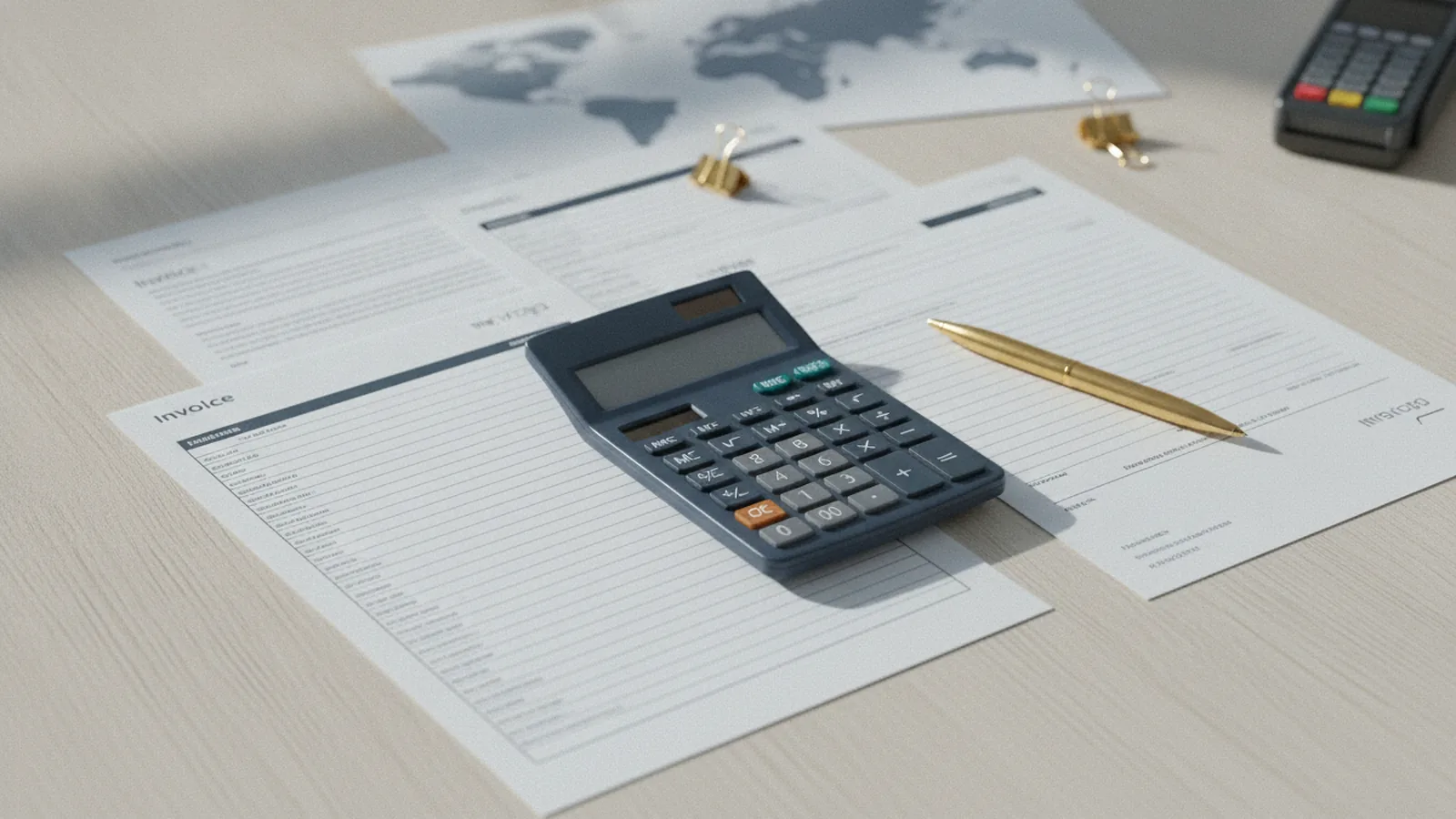
Understanding VAT basics and why it matters
VAT information is the foundation for correct pricing, invoicing, and VAT reclaim. VAT (value added tax) is charged on most sales of goods and services. Businesses collect VAT from customers and then pay HMRC the net amount. That net amount is output VAT minus reclaimable input VAT.
It becomes a cost when you cannot reclaim the related input VAT. This often happens with exempt work, private spending, or purchases that do not connect to taxable sales. If you mix those categories, your vat bill can be wrong and cash flow can surprise you. Getting the VAT logic right early saves months of clean-up work.
In this guide, “my vat” means the VAT you report and reclaim for your business. You will learn how to take off vat from prices. You will also see how vat application affects both gross and net amounts. Finally, you will get a practical checklist for reclaiming VAT safely.
- VAT registration: you charge VAT on sales once registered.
- VAT invoicing: you show VAT clearly on invoices and credit notes.
- VAT returns: you report output and input VAT on time.

How to remove VAT from prices (gross to net)
When you need to take off vat, you convert a VAT-inclusive price into a VAT-exclusive amount. This is vat application at the number level. The math depends on the VAT rate and on whether your starting price is gross or net.
If your starting figure is gross, you divide by the “VAT factor.” For UK 20% VAT, the factor is 1.20. For UK 5% VAT, the factor is 1.05. The net price is gross ÷ factor. The VAT amount is gross − net.
If you multiply when you should divide, your calculations will drift from your invoice totals. That drift can be small per line item, but big across a month. Also watch for VAT exemptions and zero-rated items, because they can break your assumptions about “usual” VAT.
| UK VAT rate | VAT factor | To get net | To get VAT |
|---|---|---|---|
| 20% | 1.20 | Gross ÷ 1.20 | Gross − Net |
| 5% | 1.05 | Gross ÷ 1.05 | Gross − Net |
| 0% (zero-rated) | 1.00 | Gross ÷ 1.00 | 0 |
- Sanity check: VAT should look like a clear slice of the gross total.
- Zero-rated VAT items: gross equals net.
- VAT exemptions: recovery can be blocked even if VAT looks “small” or “zero.”

Calculating VAT: step-by-step guide using a VAT calculator
A VAT calculator helps you avoid mental-math mistakes. It is also useful when you run the same conversion on many invoice lines. Still, the tool cannot fix wrong inputs. You must choose the correct VAT rate and correct “gross or net” mode.
Start with the document you have. Quotes and storefront prices are often gross. Supplier invoices may show net with VAT as a separate line. That detail changes your vat application, even if the rate stays the same.
Use the same workflow every time for consistency. It makes your VAT records easier to review later. It also helps during VAT compliance checks, because your method is repeatable.
- Pick the VAT rate. Use 20%, 5%, or 0% for zero-rated VAT items.
- Choose gross or net mode. Match how the price appears on your document.
- Enter the exact line amount. Use the invoice line, not an estimated total.
- Record net and VAT. Capture both values for your vat bill workpaper.
- Round consistently. Round at the same stage each time.
- Sanity-check the output. VAT should not become negative or absurdly large.
If you use a vat app, treat mode switching as step zero. Many apps show both gross and net fields. You can accidentally double-apply VAT if you fill both fields. One clean workflow beats guesswork.

Common VAT scenarios for goods, services, and cross-border sales
VAT rules depend on what you supply and who you sell to. They also depend on whether you supply goods or services. Many businesses supply a mix, so the VAT treatment changes across invoice lines.
For UK businesses, services are often taxed at the standard rate unless a special rule applies. Goods may be standard, reduced, or zero-rated. Your supplier description can help, but your internal VAT rate decision must be defensible. In practice, keep a short reason for each rate you apply in your VAT records.
Cross-border work adds another layer. You may deal with customs vat on imports, and VAT reporting can differ from domestic rules. vat and customs analysis must align, especially when goods enter the UK and duties are involved. If you treat customs VAT like normal input VAT, you can create errors in later reconciliation.
International sellers also hit “rate lookup” confusion. People search for “korean vat,” “chile vat,” “egypt vat,” or “estonia vat” when they are trying to price items. That is a sign your pricing data needs a clear country-specific VAT basis. The same happens with “vat in belarus,” “vat in nigeria,” and “vat luxembourg,” especially when you import or resell.
- Goods: rate depends on the product category and whether it is zero-rated VAT.
- Services: rate depends on the service type and place of supply.
- Imports: customs VAT can affect your overall cost base.
- Place of supply: cross-border rules change VAT treatment.

Reclaiming VAT: tips and tricks for business expenses
Reclaiming VAT starts with the link between your costs and your taxable sales. If your spending supports exempt activity, you may not reclaim. If you buy for private use, you also cannot reclaim. The goal is clear: match business expenses and VAT to your VATable output.
For a valid claim, you need the right paperwork. You typically need a VAT invoice that shows supplier details, VAT number, VAT amount, and the supply description. Receipts can be enough for smaller items, depending on your case and the invoice rules you follow. If your documents are messy, your claim becomes a dispute instead of a workflow.
Watch for operational edge cases. For example, “can you get vat back on hotels” is often a question about business travel, but you still need the expense purpose and valid evidence. Another common issue is partial recovery when some costs relate to both taxable and exempt activities.
Also consider flat rate vs standard approach. If you are under the flat rate scheme, your VAT calculation and input VAT recovery work differently. You cannot apply the same reclaim logic as for standard accounting. Choose the method that matches your registration setup.
| Expense type | What to collect | Typical reclaim risk |
|---|---|---|
| General services | VAT invoice and supplier details | Wrong VAT rate on the invoice |
| Travel and subsistence | Hotel or transport VAT receipt | Private element or weak business link |
| Stock and materials | Supplier invoice with VAT breakdown | Mix of taxable and exempt output |
| Imports | Import docs showing VAT handling | Confusing customs VAT vs reclaimable VAT |
If you work with marketplaces, record the VAT handling clearly. For “vat on ebay purchases,” the VAT outcome may depend on how the seller is structured and how VAT is accounted. Don’t assume that the listing price equals a simple VAT amount you can reclaim. Check the supplier documentation you actually receive.
Some sectors also raise frequent reclaim questions. People ask about “vat restaurant” costs, and the answer still comes down to business purpose and evidence. Keep invoices in one place, and tag costs to the VAT output they support.
- Keep valid invoices, not just totals.
- Match costs to taxable sales.
- Document travel purpose when you claim.
- Know your scheme: flat rate vs standard.
VAT regulations and compliance: avoid common mistakes
VAT compliance is less about memorizing rules and more about staying consistent. Your VAT records must support what you declare. If your vat bill values cannot be traced to source invoices and receipts, they will not hold up under review.
Common pitfalls include using the wrong VAT rate, mixing gross and net numbers, and rounding inconsistently. Another big one is treating exempt supplies like taxable supplies. That can lead to claims you cannot defend later. When in doubt, separate transaction types in your spreadsheet logic or accounting setup.
You also need clarity on VAT calculations beyond basic rates. People sometimes look for “VAT equation” or “VAT formula” when they want a shortcut. Use clear factor-based steps instead, because they map directly to gross and net pricing. If you build a spreadsheet, test it with known examples before you apply it at scale.
For international work, check import handling and place of supply rules. People search for “vat declaration” when they need to understand what to file. Your declaration process should reflect your VAT registration and your transaction types. If you treat international transactions like domestic ones, errors often appear in VAT and customs reconciliation.
Finally, if you are unsure about a high-value or complex area, get expert support. Many businesses look for “vat lawyers” for dispute situations. For day-to-day compliance, an experienced VAT adviser can still help you set up a clean process. The key is to fix the root cause, not just the calculation.
- Use one method for each calculation path.
- Separate exempt and taxable supplies.
- Keep rounding rules consistent.
- Trace every figure to paperwork.
Useful tools for VAT management (and what they can’t do)
Tools help, but they do not replace VAT understanding. A VAT calculator speeds conversions and reduces slips. Accounting software can organize invoices and reports. Still, you must control inputs and rates.
A good VAT workflow combines three things. First is rate control: standard, reduced, or zero-rated VAT items. Second is document control: valid invoices and clear expense evidence. Third is review control: periodic checks on your VAT totals against source data.
If you have lots of invoices, consider building a small VAT lookup table for your common rates. It makes “take off vat” conversions faster and more consistent. For complex imports, maintain a separate notes file for customs VAT and VAT on imports records.
- VAT calculator for gross/net conversions
- Spreadsheet checks for rate and rounding control
- Invoice storage for fast validation
- Clear scheme notes for flat rate vs standard
If you are planning “VAT security” for your process, start with access control. Limit who can edit VAT rates and invoice mappings. Add a review step before submission. This reduces the risk of accidental mis-entry and protects your VAT and customs records.
VAT FAQs
Below are short answers to the VAT questions people ask most often when they try to take off VAT and submit VAT returns. Use them as starting points, then rely on your documents and your VAT records.
- VAT FAQs can guide your choices, but they cannot replace proper invoice checks.
Step-by-step
- 01 Choose the right VAT rate
Pick the UK rate that matches your supply: 20%, 5%, or zero-rated VAT items at 0%. If it is exempt, plan for limited or no input VAT recovery.
- 02 Confirm gross or net starting point
Check whether your price includes VAT or is VAT-exclusive. Match the input to your VAT calculator settings or spreadsheet method.
- 03 Take off VAT to find the net amount
Divide gross by the VAT factor to get net. Subtract net from gross to get the VAT amount.
- 04 Record net and VAT for your VAT bill
Enter both amounts into your invoice line tracking. This keeps your VAT records audit-ready for VAT compliance.
- 05 Use consistent rounding
Round at the same stage for every line item. Consistency prevents small gaps from turning into a big monthly mismatch.
Frequently asked questions
- How do I take off VAT from a price that includes VAT?
- If the price is gross, divide by the VAT factor. For 20% use 1.20, and for 5% use 1.05.
- What is a VAT application and why does it matter for invoices?
- VAT application is the process of applying the right VAT rate to gross or net amounts. If you use the wrong rate or mode, your VAT bill can mismatch invoices.
- Can I reclaim VAT on business expenses and hotel costs?
- Often you can, if the expense links to your taxable sales. You also need valid VAT invoices or receipts showing the VAT amount.
- What documents are needed for a VAT declaration and reclaim?
- You typically need valid VAT invoices for purchases and clear evidence for travel and expenses. Keep records that let you trace each VAT figure back to the source.
- How does customs VAT affect VAT when importing goods?
- Customs VAT can change your import cost base and your VAT reporting approach. Treat customs VAT carefully so it matches the VAT and customs handling in your records.
- Where do mistakes usually happen in VAT calculations?
- Common issues are mixing gross and net numbers, using the wrong VAT rate, and inconsistent rounding. Another big risk is claiming VAT for exempt supplies.
Related reading

Bahrain VAT Guide for Businesses: Rates, Registration, Returns
Bahrain VAT rates, registration, exemptions, returns, and invoicing rules.

VAT Explained: l vat, Supply Chain, Rates, and Filing
VAT explained end to end: how it works, rates, exemptions, and how to file on time.

Small Business Tax Programs: What They Are and How to Pick One
Understand small business tax programs and pick the right software for your filing season.