Payment Gateway vs Merchant Account: How They Work Together
See how payment gateways and merchant accounts handle card payments.

Payment Gateways: The Secure Door for Payment Data
The difference between a payment gateway and merchant account is simple. A gateway moves payment data, while a merchant account holds card funds. Both parts work together during an electronic payment.
A payment gateway is the first point of contact for transaction data. It captures card details from a checkout page or payment terminal. Then it encrypts that data before sending it to the payment processor or acquiring bank.
Encryption turns sensitive card data into a protected form. This helps limit the risk of theft while data moves between the customer, merchant, and banks. The gateway also sends back an approval or decline result.
Gateways may offer tools for fraud checks, saved cards, and recurring billing. Some work with online stores, mobile apps, or in-person terminals. The gateway does not usually hold the merchant's money.
- It collects payment details from the customer.
- It encrypts and sends the payment request.
- It returns an approval or decline message.
- It may check risk before sending the request onward.

Merchant Accounts: Where Card Funds Wait
A merchant account is a special bank account for card payments. It receives funds after card transactions gain approval. The funds stay there until the provider sends them to the business bank account.
This account sits within the merchant acquiring system. The acquiring bank works with card networks and the business. It helps route funds from the customer's bank to the merchant.
A merchant account is not the same as a normal checking account. It exists for payment settlement and risk control. The provider may hold a reserve when refunds or disputes pose a higher risk.
Settlement often takes one to three business days. The exact time depends on the provider, payment type, and business country. Cross-border payments may take longer or cost more.
| Part | Main job |
|---|---|
| Payment gateway | Moves and protects payment data |
| Merchant account | Receives and holds card funds |
| Business bank account | Receives settled funds for daily use |
The Main Difference Between a Payment Gateway and Merchant Account
In a payment gateway and merchant account comparison, focus on data versus money. The gateway handles the payment request. The merchant account handles approved funds and settlement.
The gateway works during checkout. It sends the card details for approval and shows the result. The merchant account works after approval. It helps collect, hold, and transfer the funds.
These services can come from one provider or from separate firms. A combined service may simplify setup. Separate providers may give you more choice over features and rates.
- Gateway role: secure data transfer and payment approval.
- Merchant account role: fund holding, settlement, refunds, and risk support.
- Gateway cost: often a per-payment fee or monthly platform fee.
- Merchant account cost: often monthly, payment, dispute, and reserve fees.
Some businesses ask, “What is a gateway merchant account?” The phrase often means a setup that combines both services. It does not always mean that the gateway itself holds the funds.

How a Card Payment Moves From Checkout to Settlement
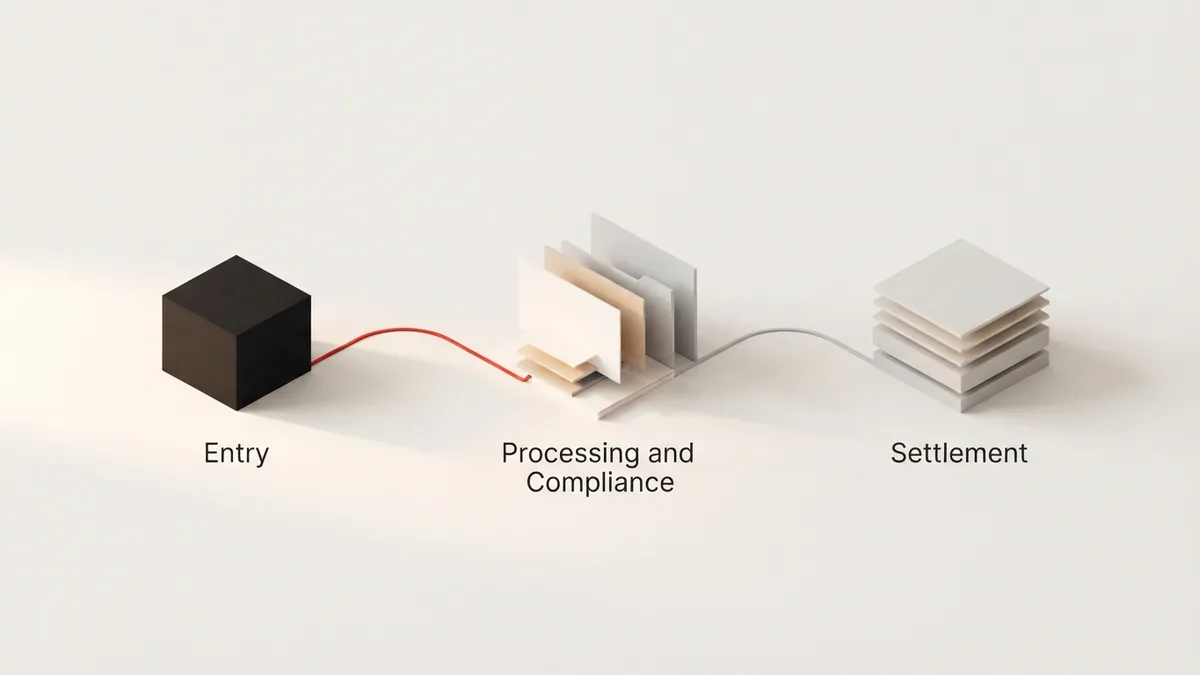
The transaction flow has several steps. Each step passes information or funds to a different party. Here is a typical online card payment.
- The customer enters card details at checkout.
- The gateway encrypts the details and sends the request.
- The processor routes the request through the card network.
- The customer's bank checks the account and approves or declines it.
- The result travels back through the network and gateway.
- The acquiring bank later settles approved funds into the merchant account.
- The provider transfers the settled balance to the business bank account.
An approval does not mean the merchant has the money at once. It means the customer's bank accepted the payment request. Settlement comes later, after the payment is captured and cleared.
For example, a $100 order may receive approval within seconds. The merchant account may receive the funds the next business day. Fees and refunds can reduce the amount sent to the business bank account.
Payments can fail at several points. The card may lack funds, the gateway may block a risk signal, or the bank may reject the request. Clear error messages help customers fix valid payment issues.
Why Both Components Matter
A gateway without a merchant account has nowhere to send settled card funds. A merchant account without a gateway lacks a smooth way to collect online payments. The two parts must connect with care.
Good gateway security protects data at the start of the payment. Good account controls protect funds after approval. Together, they support safer checkout and fewer payment delays.
Security also affects customer trust. Customers expect quick approval, clear failure messages, and safe handling of card details. The PCI Security Standards Council's merchant guidance explains core duties for businesses that accept card payments.
Businesses should also plan for refunds and disputes. A refund sends money back to the customer. A dispute can remove funds from the merchant account while the provider reviews the case.
- Use strong sign-in controls for payment dashboards.
- Limit staff access to payment data and fund reports.
- Review failed payments and dispute rates each month.
- Keep gateway, processor, and bank records matched.
How to Choose the Right Gateway and Merchant Account
Start with your sales channels and payment needs. An online shop may need hosted checkout and saved payment methods. A store may need terminal support and fast settlement.
Next, compare the full fee model. A low headline rate may hide monthly fees or costly disputes. Ask for a sample cost at your expected sales volume.
| Cost or feature | Question to ask |
|---|---|
| Gateway fee | Is there a fee for each payment or month? |
| Merchant account fee | Are monthly account fees charged? |
| Settlement | When will funds reach the business bank account? |
| Refunds | Do fees return when a payment is refunded? |
| Disputes | What fee applies to each card dispute? |
| Reserve | Can the provider hold part of the balance? |
Check support, uptime, and setup needs before signing up. Ask if the service supports your country, currency, and business type. Also check whether you can export payment and settlement reports.
The best setup is not always the cheapest one. Choose a provider that fits your sales volume and risk level. Smooth payment processing can protect both cash flow and customer satisfaction.
Frequently asked questions
- What is the difference between a payment gateway and merchant account?
- A payment gateway sends and protects payment data during checkout. A merchant account receives and holds approved card funds before transfer.
- Do I need both a payment gateway and a merchant account?
- Most online businesses need both functions. Some providers bundle them into one payment service.
- What is a gateway merchant account?
- It usually means a payment setup that combines a gateway with a merchant account. The gateway moves data, while the account holds funds.
- How long do merchant account funds take to settle?
- Many payments settle within one to three business days. The time varies by provider, payment type, and risk checks.
- What fees do merchant accounts charge?
- Common fees include monthly account fees, per-payment fees, refund fees, and dispute fees. Some providers also set a reserve.
- Can a payment gateway hold my money?
- Usually, no. The merchant account or payment provider holds funds during settlement.
Related reading

Returned ACH Card Payment CONA: What It Means and What to Do
Understand CONA returns, fix failed ACH payments, and reduce future returns.

VAT Software Explained: Features, Costs and MTD Filing
Compare VAT tools and find the right fit for UK MTD filing.

How Tourists Claim a VAT Refund in Italy
Claim back eligible Italian VAT with the right form, goods, and customs check.