Payment Orchestration for Cross-Border Sellers: Routing, Failover and Compliance
A practical guide to payment orchestration for cross-border sellers: routing, failover, local methods, PSD2/SCA, PCI scope and reconciliation.
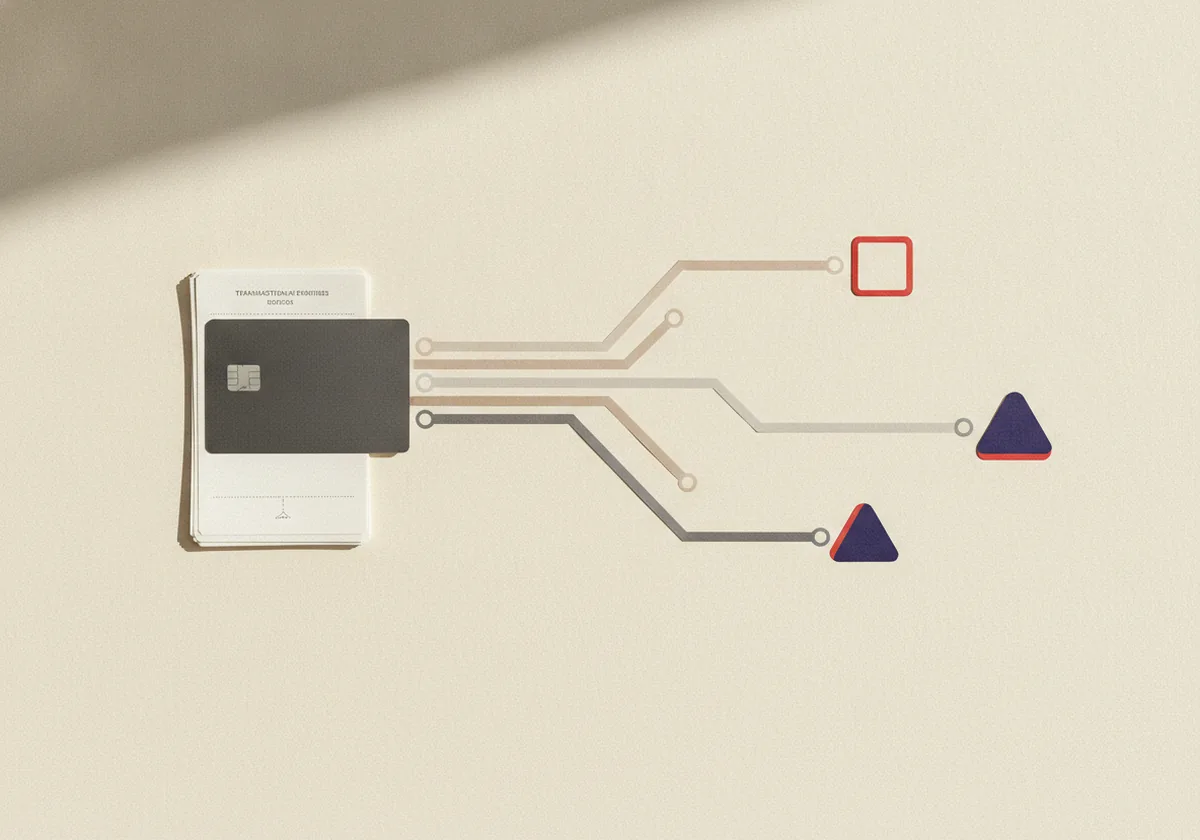
Selling across borders multiplies the ways a checkout can fail. A card that clears in one country is soft-declined in another; a wallet that converts in one market is missing at the next border. As the stack grows, the question stops being "which gateway do we use" and becomes "how do we route each payment to the path most likely to clear." That shift is what payment orchestration answers, and this guide walks through the parts a cross-border commerce, SaaS, marketplace or finance team has to reason about.
Orchestration, gateway and processor: three different jobs
The three terms name distinct layers. A processor moves the money: it connects to the card networks and banks to authorise and settle a transaction. A gateway is the entry point your checkout talks to — it encrypts card data, forwards the request to a processor, and returns the result. For one market and one acquiring relationship, that pair is usually enough.
A payment orchestration layer sits above both. Instead of hard-wiring your checkout to one gateway, you integrate the platform once and it connects onward to many gateways, acquirers and payment methods. It decides which path each transaction takes, retries when a path fails, and normalises every provider's reporting into one shape — so adding or swapping a provider becomes a configuration change, not another integration.
When a single payment gateway is no longer enough
A single-gateway setup is restrictive well before it actually breaks. The first sign is geography: your provider acquires strongly in a few countries and weakly elsewhere, so approval rates sag where you are trying to grow. The second is method coverage — shoppers in many markets expect local cards, wallets or account-to-account transfers a single gateway may not support. The third is commercial: with one acquirer you have no pricing leverage and no fallback when that provider has an outage, a risk-policy change, or a settlement delay that strands cash flow.
Concentration risk is the quiet one. When every transaction depends on one connection, a single provider incident becomes a full checkout outage. Merchants reaching this point start evaluating orchestration platforms that run several acquirers in parallel. topropay is one example of such a platform a merchant might assess alongside others, comparing routing, provider coverage and reporting rather than treating any single vendor as a default. The point of the exercise is optionality: the ability to move volume between providers on your terms.
Multi-acquirer routing and transaction-level rules
The core of orchestration is routing: choosing, per transaction, which acquirer or gateway should handle it. Good routing is rule-driven and evaluated per payment. Common inputs include the shopper's country and currency, the card brand and issuer, the amount, the method, and each provider's historical approval performance. From those you can express rules that match how the business actually earns — route domestic transactions to a local acquirer to lift approval rates and cut interchange; send a currency to the provider that settles it without an FX markup; cap a newer provider while you build confidence in it. Because the rules live in the orchestration layer, not your checkout code, payments teams adjust them as performance shifts without a release each time.
Failover and soft-decline cascading
Not every decline is final. Card networks distinguish hard declines — stolen card, closed account, do-not-honour — which should never be retried, from soft declines caused by transient issues such as an issuer timeout, a suspected-fraud hold, or temporary insufficient funds. Retrying a hard decline is pointless and can attract penalties; retrying a soft decline on a different path can recover a sale that would otherwise be lost.
Cascading (intelligent retry) automates this: when a transaction is soft-declined on the first acquirer, the orchestration layer re-attempts it through a second, respecting the reason code so hard declines are never cascaded. Failover applies the same mechanism to availability — if a provider is unreachable or degraded, traffic shifts to a healthy one without the shopper seeing an error. Cap the number of retries so you do not pay for repeated failures, and respect network rules on frequency.
Local payment methods by market
Cards are not the default everywhere. In several European markets, bank transfers and account-to-account schemes carry a large share of online spend; wallets dominate in parts of Asia; other regions lean on domestic card networks. When a shopper cannot pay the way they expect, they abandon — so method coverage is a growth lever, not a nicety. Orchestration makes this manageable because each method is another connection behind the same integration: you present the right mix per market and route each to a provider that supports it well. The discipline is to prioritise — enable the two or three methods that matter most where your volume actually is, not a long tail that clutters the checkout.
PSD2, SCA and 3-D Secure considerations
In the European Economic Area, cross-border card acceptance runs under strong customer authentication (SCA). The EU Payment Services Directive (PSD2) requires most electronic payments to be authenticated with at least two independent factors, typically delivered through 3-D Secure 2 (3DS2) during checkout. Done well, it protects the payment and can shift fraud liability to the issuer; done badly, it adds friction and drops conversion.
Orchestration helps on two fronts. It lets you apply the SCA exemptions PSD2 allows — low-value or transaction-risk-analysis, for instance — so challenges appear only when required or worthwhile. And because 3DS2 outcomes vary by issuer, routing that accounts for authentication performance can send a transaction down the path most likely to clear. The compliance obligation is fixed; how gracefully you meet it is a design choice.
Keeping PCI DSS scope contained
Any system that touches cardholder data falls within the scope of the PCI Data Security Standard, and scope is the variable that most affects your compliance cost: the more of your own infrastructure that stores, processes or transmits raw card numbers, the heavier the assessment. A central goal when designing a multi-provider setup is to keep that scope as small as defensibly possible.
Tokenisation and hosted fields are the usual tools: card data is captured by a PCI-compliant component and returned as a token, so your servers handle a reference rather than the number itself. An orchestration layer can also vault tokens across providers, so one stored credential serves more than one acquirer — supporting routing and retries without re-collecting the card. Confirm how any platform handles tokens, where card data lands, and which assessment level the arrangement implies before routing live traffic through it.
Centralised reconciliation and reporting
The hidden tax of a multi-provider stack is reconciliation. Each acquirer reports settlements, fees, refunds, chargebacks and payout timing in its own format and schedule; stitching that together by hand does not scale, and gaps quietly erode margin. Orchestration earns back much of its cost here — by normalising transaction and settlement data across providers into one ledger you can audit. Look for a transaction identifier that follows a payment through its lifecycle, plus settlement files your finance team can match against payouts.
Vendor evaluation criteria
When comparing platforms, weigh the capabilities that decide whether the layer will actually serve you:
- Provider coverage: which gateways, acquirers and local methods are integrated in your markets, and how new ones are added.
- Routing control: how expressive the rules are, whether you can edit them yourself, and whether cascading and failover are configurable.
- Compliance posture: PCI scope reduction, the tokenisation model, SCA handling and PSD2 exemption support.
- Data and reconciliation: the quality of unified reporting, settlement files and the exports your finance stack needs.
- Commercials and lock-in: pricing transparency, whether tokens are portable if you leave, and onboarding cost per provider.
- Reliability: published uptime, how outages are handled, and the support model when a path degrades.
No single vendor wins on every axis, so score them against your own volume map, not a generic feature grid.
An implementation checklist
Rolling out orchestration is less risky when it is sequenced — a workable order of operations:
- Map current state: markets, currencies, methods, providers, and each one's approval rate and cost.
- Define the target: the acquirers and local methods you want per market, and the outcomes you are optimising for.
- Model the scope: decide where card data will live and confirm the PCI DSS implications first.
- Integrate once, then add providers as configuration, not new checkout builds.
- Author routing rules: start simple — domestic-to-local, currency-to-best-settlement — and refine as data arrives.
- Set failover and cascading with retry limits and reason-code handling so only soft declines cascade.
- Validate SCA and 3DS across representative issuers before going live.
- Wire reconciliation: confirm the unified ledger, transaction IDs and settlement matching work end to end.
- Roll out gradually: shift a slice of volume first, watch approval and cost, then widen once the numbers hold.
Approached this way, orchestration is not a rip-and-replace but a coordinating layer on top of your stack — turning a brittle single path into routes you can tune as you grow.
Frequently asked questions
- What is the difference between payment orchestration and a payment gateway?
- A gateway is a single entry point to one processor or acquirer. Orchestration sits above many gateways and acquirers and routes each transaction to the best available path.
- When should a merchant move beyond a single gateway?
- When approval rates sag in some markets, shoppers lack a local payment method, or dependence on one acquirer creates pricing and outage risk.
- What is soft-decline cascading?
- It automatically retries a transiently declined payment through a second acquirer, while never retrying hard declines such as stolen-card or closed-account responses.
- How does orchestration relate to PSD2 and SCA?
- It applies strong customer authentication through 3-D Secure 2 and lets you use the PSD2 exemptions where they fit, so authentication appears only when it is required.
- Does adding more providers increase PCI DSS scope?
- Not if card data is tokenised and captured by PCI-compliant components. Keeping raw card numbers off your own systems keeps the assessment small.
Related reading

How to Use a VAT Refund Calculator Across Europe
Estimate your VAT refund and learn each country’s claim steps.

Secure Online Payment Gateways: Encryption and Compliance
Learn how payment gateways work and choose one that keeps sales safe.

Merchant Card Processor Accounts: A Clear Business Guide
Learn how merchant accounts work, what they cost, and how to set one up.